
Fitch Ratings on Thursday raised India's GDP growth forecast for the current fiscal to 7.4 per cent, from 6.9 per cent, on increased consumer spending and improved sentiment boosted by GST reforms.
The government on Tuesday appointed three external members -- Ram Singh, Saugata Bhattacharya and Nagesh Kumar -- to the RBI's rate-setting Monetary Policy Committee for four years. The central government has reconstituted the Monetary Policy Committee (MPC) of RBI, the finance ministry said in a statement. Ram Singh is the director of the Delhi School of Economics, Saugata Bhattacharya is an economist, and Nagesh Kumar is the director and Chief Executive, Institute for Studies in Industrial Development, New Delhi.

Sanjay Malhotra has made structural changes to banking regulation to bring down costs and increase efficiency. Plus, he kicked off a benign interest regime. But there are challenges ahead.

In the Sensex pack, Hero MotoCorp, IndusInd Bank, Bajaj Auto, Maruti and M&M were the top gainers, spurting up to 2.66 per cent.
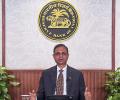
For the time being, the RBI is done with the cuts. A cut in October, which many are still predicting, is not certain. Of course, if growth nosedives, the script will be different, expects Tamal Bandyopadhyay.

After effecting two back-to-back 25 basis points rate cuts, Reserve Bank Governor Sanjay Malhotra on Wednesday hinted at another reduction in key policy rate by changing the central bank's monetary stance to 'accomodative' from 'neutral', which may further lower EMIs for consumers.

The weakening of inflation, prospects of economic growth, geopolitical uncertainty and comfortable system liquidity may result in the Reserve Bank of India's (RBI) Monetary Policy Committee (MPC) to cut the repo rate by another 25 basis points, opine top economists. They also said the external economic pressures like trade policies and others would require continued RBI's accommodative stance and policy support for the Indian industry to sustain the growth.

'Economic activity appears to have peaked in the second quarter of FY26, with industrial output, exports, and business confidence all softening from October 2025.'

'Given the lag in transmission, further softening of lending rates may happen in the coming months.'

Reserve Bank of India (RBI) Governor Sanjay Malhotra, and Deputy Governors Poonam Gupta, T Rabi Sankar, Swaminathan J, and S C Murmu on Friday addressed issues during the post-policy media interaction.
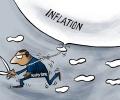
'Deposit and lending rates have started to fall considerably. It is likely to spur investment and consumption of durables.'

The Reserve Bank of India on Thursday decided to keep the policy rate unchanged for the ninth time in a row, saying food inflation remains stubborn. The rate increase cycle was paused in April last year after six consecutive rate hikes, aggregating to 250 basis points since May 2022.
Reserve Bank will "wait and watch" the evolving situation before deciding on any further rate cut, Governor Sanjay Malhotra has said as he emphasised that both growth and price stability are equally important. With inflation on a downward trend, the RBI's Monetary Policy Committee (MPC) has been reducing the benchmark repo rate and has adopted a neutral stance, which also gives the flexibility to either cut or hike the rate going forward. The central bank has cummulatively reduced the repo rate by 100 basis points since February.

Days after the US Fed raised the interest rate, the RBI may go in for its third consecutive policy rate hike by at least 35 basis points to check high retail inflation, experts said. The central bank has already announced to gradually withdraw its accommodative monetary policy stance. The Reserve Bank of India's rate-setting panel -- the Monetary Policy Committee -- will meet for three days from August 3 to deliberate on the prevailing economic situation and announce its bi-monthly review on Friday.
Since February 2025, the RBI has reduced the policy rate by 100 basis points. In its previous policy review in April, it had also trimmed the repo rate by 25 basis points to 6 per cent.
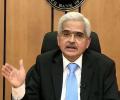
Reserve Bank of India (RBI) Governor Shaktikanta Das has said the decision on interest rate moderation will be based on long-term inflation trajectory and not monthly data. The Monetary Policy Committee (MPC) headed by the RBI Governor is scheduled to meet between October 7 and 9 and take call on interest rate. The RBI kept the repo rate unchanged at 6.5 per cent for the ninth time in a row amid risks from higher food inflation.

Stock markets closed higher on Friday after the Reserve Bank of India kept its benchmark interest rate unchanged as expected and proposed allowing banks to lend to Real Estate Investment Trusts (REITs) with certain prudential safeguards to deepen the financing pool for the real estate sector.

From the Sensex firms, State Bank of India, Bajaj Finserv, Bajaj Finance, Maruti, HCL Tech, Larsen & Toubro, Mahindra & Mahindra and Infosys were among the major winners. However, Hindustan Unilever, Eternal, Tata Motors Passenger Vehicles, and Sun Pharma were among the laggards.

Insights from behavioural economics suggest that an ambitious nudge can be effective if three conditions are met, points out Ram Singh Insights from behavioural economics suggest that an ambitious nudge can be effective if three conditions are met, points out Ram Singh, director, Delhi School of Economics.

Fitch Ratings on Friday said persistently higher oil prices could cause India's retail inflation to rise faster than the expected gradual pace, and lead to a slowdown in economic growth in the first half of financial year 2026-27 (FY27).

Among the Sensex firms, ITC, Kotak Mahindra Bank, ICICI Bank, Nestle, Axis Bank, IndusInd Bank, UltraTech Cement, Bajaj Finance, Maruti and HDFC Bank were the major laggards.

As the rupee remains under pressure due to several headwinds and the uncertainty around the India-US trade deal, the Reserve Bank of India (RBI) has been stepping in only to calm volatility, not to stop the fall.

S Mahendra Dev, chairman of the Economic Advisory Council to the Prime Minister, expressed confidence that the rupee would stabilise around the 92-93 level against the US dollar, despite geopolitical tensions, and that foreign investment flows would return.
Mixed views were expressed by top economists on the Reserve Bank of India's (RBI) Monetary Policy Committee's (MPC) decision to hold the repo rate at 5.5% and maintain a neutral stance. While some say the decision was as expected and one more rate reduction is expected this fiscal, there is also a view that rate cut by MPC was warranted given the evolving global situation.

RBI's interest rate decision, macroeconomic data, global trends and trading activity of foreign investors are the crucial factors to drive equity markets in a holiday-shortened week ahead, analysts said. Markets would remain closed on Monday for Gandhi Jayanti. "While global cues will continue to dictate trends in local markets, focus will shift to RBI's monetary policy announcement on Friday. "Although the market is expecting a status quo on interest rates, global concerns like rising US dollar index and bond yields coupled with surging crude oil prices continue to weigh on investors' minds.
The Reserve Bank of India on Wednesday decided to keep the policy rate unchanged for the tenth time in a row but changed its stance to 'neutral' that may lead to a cut in the forthcoming policies. RBI maintained status quo despite the US Federal Reserve lowering the benchmark rates by 50 basis points last month.

'The US reciprocal tariff has added another element of uncertainty and the central bank may prefer to wait and get further clarity.'

The Reserve Bank of India's (RBI) Monetary Policy Committee's (MPC) decision to cut the repo rate by 50 basis points (bps) to 5.5% was contrary to the expectations of many economists. Firstly, most of the economists expected the MPC to cut the repo rate by 25 bps citing the weakening of inflation, prospects of economic growth, geopolitical uncertainty and comfortable system liquidity.
Indian stock markets experienced a significant rally following the announcement of a US-Iran ceasefire, coupled with a drop in crude oil prices. The Sensex and Nifty both closed nearly 4 per cent higher, mirroring gains in global markets.
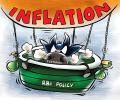
The Reserve Bank on Wednesday lowered the inflation projection for the current fiscal to 4 per cent from 4.2 per cent earlier, taking into account good agricultural output and falling crude prices.

Perhaps because the Modi government had some differences of opinion with two of the economist governors (one of whom was appointed by the Manmohan Singh government), there is a view that its political leadership prefers a civil servant to head the RBI, notes A K Bhattacharya.

Overall economic activity continued to hold up in November with demand conditions remaining robust, thanks to strengthening urban demand, but manufacturing and rural demand showed some signs of deceleration even as services remained strong, according to an article on the State of the Economy written by Reserve Bank of India (RBI) officials in the central bank's December bulletin.

Ahead of the Reserve Bank of India's (RBI's) monetary policy review in the first week of December, major public sector non-banking financial companies (NBFCs) - the National Bank for Agriculture and Rural Development (Nabard), Small Industries Development Bank of India (Sidbi), Power Finance Corporation (PFC), and Indian Railway Finance Corporation (IRFC) - plan to raise up to Rs 24,000 crore together through bond issuancesk.

Uncertainties over the impact of the United States' (US') tariffs on India, along with the ongoing transmission of past rate cuts, prompted the members of the Reserve Bank of India's Monetary Policy Committee (MPC) to maintain the status quo during the August meeting, the minutes showed. While some of the external members highlighted their concern over growth, the internal members cited the one-year headline inflation rate overshooting the 4 per cent target.

Among the 30 Sensex firms, Asian Paints, Infosys, JSW Steel, UltraTech Cement, Power Grid, Larsen & Toubro, HCL Technologies and Tata Steel were the biggest laggards. Tata Motors, HDFC Bank, Bharti Airtel, ITC, IndusInd Bank and Axis Bank were the gainers.
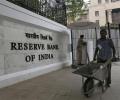
Growth remains weak, inflation is within 2-6% range, rate cut would help recoup forex reserves

Reserve Bank on Friday decided to cut Cash Reserve Ratio (CRR) by a huge 1 per cent, which will unlock Rs 2.5 lakh crore liquidity to the banking system for lending to productive sectors of the economy. With the reduction in four equal tranches ending November 29, 2025, the CRR would come down to 3 per cent.
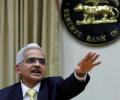
The MPC headed by RBI Governor Shaktikanta Das will announce the resolution of the meeting at around noon on Thursday.
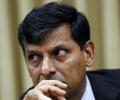
Govt likely to get full control on policy rate.

India is gearing up to introduce a six-member monetary policy committee that would vote on interest rates.
